
Lecture Block 1 · Why quantum computation for QFT?
Indrakshi Raychowdhury
Assistant Professor, Department of Physics, BITS Pilani, K K Birla Goa Campus; Center for Research in Quantum Information and Technology
Research area: Hamiltonian lattice gauge theory, quantum simulation for QCD, gauge constraints, qubit encodings, analog and digital simulation, tensor-network methods
Indrakshi Raychowdhury is a theoretical high-energy physicist working on lattice gauge theory and quantum simulation. Her work focuses on Hamiltonian lattice gauge theories, strong-interaction physics on quantum computers, and related analog, digital, and tensor-network approaches.
At the school: Prof. Raychowdhury is the proposed lecturer for the opening question “Why quantum computation for QFT?”. Her lectures would introduce the motivation for quantum computation in QFT, Hamiltonian lattice formulations, gauge constraints, and the basic logic of mapping field-theory problems to qubit-based systems.
Lecture Block 2 · How to simulate?
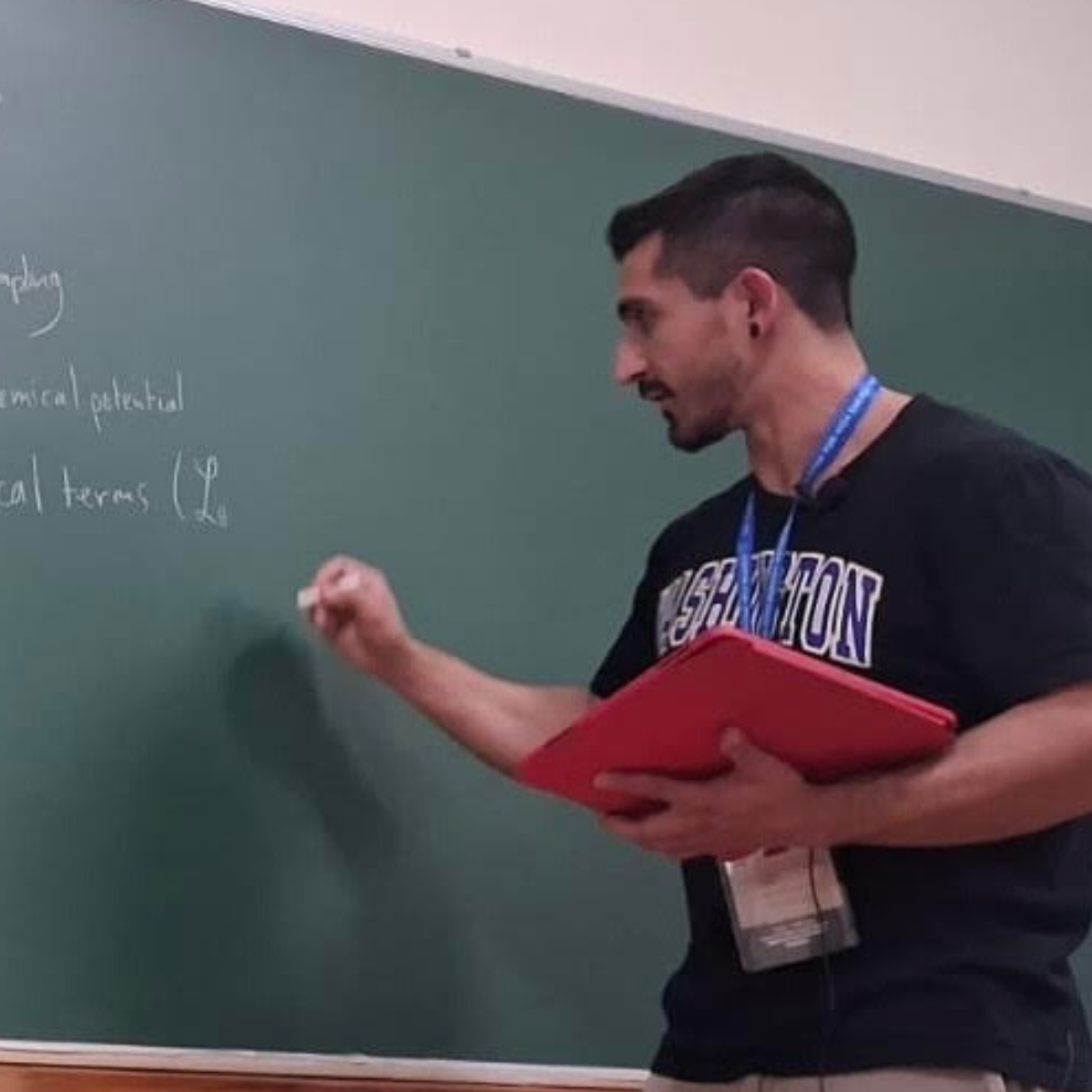
Jesse Stryker
Postdoctoral Scholar, Physics Division, Lawrence Berkeley National Laboratory
Research area: Hamiltonian lattice gauge theory, QCD in quantum computation, loop-string-hadron formulations, and quantum simulation costs.
Jesse Stryker works on novel theoretical studies of QCD, especially those rooted in the Hamiltonian framework. Since his doctoral research at the Institute for Nuclear Theory in Seattle, he has been interested in the bridge between QFT formalism and the eventual simulation of QCD using real quantum computers. This has led to a number of works on the loop-string-hadron (LSH) formulation of lattice gauge theories, which is being applied for quantum simulations as well as tensor-network calculations. He is also known for seminal work on establishing precise upper bounds on the costs associated with simulating lattice gauge theories on quantum computers.
At the school: Dr. Stryker is the proposed lecturer for the 2nd theme - "How to simulate?". His lectures would focus on the simulation pipeline from Hamiltonian models to state preparation, real-time evolution, and the measurement of observables and correlation functions.
Lecture Block 3 · How to trust the results?
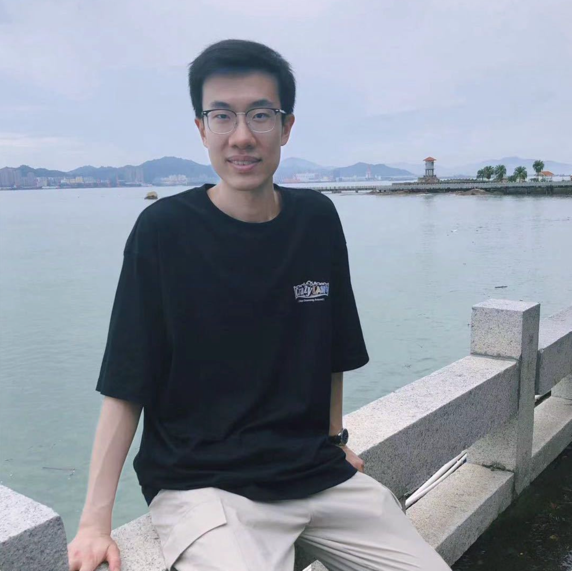
Xiaoyang Wang
Postdoctoral Scholar, RIKEN Center for Interdisciplinary Theoretical and Mathematical Sciences (iTHEMS)
Research area: Quantum computation, lattice field theory, near-term quantum algorithms, spin models, and error mitigation and verification.
Xiaoyang Wang is a postdoctoral researcher at RIKEN, affiliated with both the Quantum Mathematical Science Team at iTHEMS and the Field Theory Research Team at R-CCS. His research lies at the intersection of quantum computation and many-body systems, with a particular focus on near-term quantum algorithms for lattice field theory, spin models, and related computational problems on currently available quantum devices. His work connects quantum algorithms, realistic noise limitations, and the search for scientifically useful quantum advantage.
At the school: Dr. Wang is the proposed lecturer for the third lecture block, “How to trust the results?” The theme includes implementing quantum algorithms using quantum cloud platforms, interpreting and improving measurement results using error mitigation and error correction methods.